Exit Hardware That Functions Under Load
Panic Bar and Exit Device Services in Wichita Falls for commercial doors equipped with push-to-exit hardware requiring reliable operation
Why Exit Device Selection Matters for Your Opening
Push-to-exit hardware allows occupants to leave a building by pressing a horizontal bar or touch pad that retracts the latch mechanism, enabling egress without turning a knob or operating a lever. Duncan's Commercial Lock LLC installs and services panic bars and exit devices on commercial doors throughout Wichita Falls and the surrounding North Texas region. You encounter this hardware on retail storefronts, office buildings, schools, warehouses, and any commercial facility where rapid exit during emergencies is required. The device must release the latch reliably under pressure from any height and angle, allowing exit even when occupants push the bar in a hurry or without precise hand placement.
Exit hardware selection depends on the door's construction, whether the opening requires exterior access control, and the traffic level that will cycle the device daily. Rim-mounted devices attach to the door's interior surface and operate a surface-mounted latch, while mortise devices integrate with locks recessed into the door's edge. Vertical rod devices extend rods to latching points at the top and bottom of the door, suitable for pairs or doors without available space for rim latching hardware. The touchpad style, bar length, finish durability, and optional exterior trim all vary based on the opening's function and aesthetic requirements.
Call Duncan's Commercial Lock LLC to discuss existing exit hardware service needs or planned replacement for your commercial opening.
What Happens During Exit Device Service
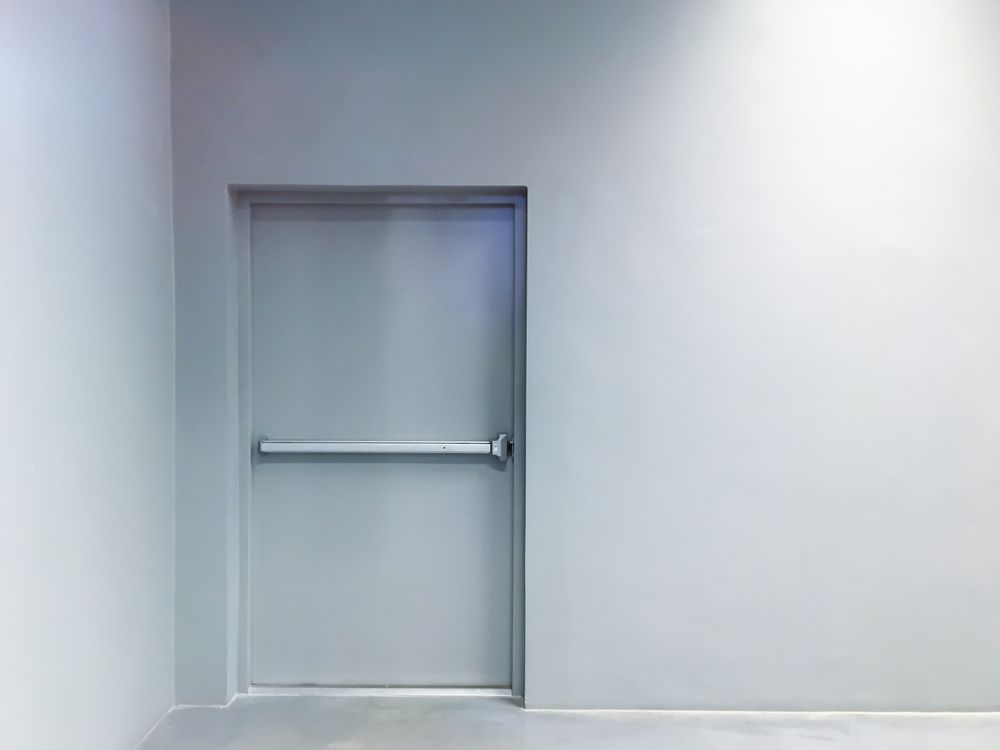
Service involves inspecting the touchpad or bar mechanism, internal latching components, exterior trim if installed, and all mounting hardware that secures the device to the door. High-use devices accumulate wear in the internal linkage, pivot points, and latch retraction mechanism, causing delayed release, incomplete retraction, or failure to reset after the bar is released. Loose mounting screws allow the device to shift during operation, and strike misalignment prevents the latch from engaging properly when the door closes.
After service, the bar retracts the latch immediately when pressed, releases fully across the bar's entire length, and resets to the latched position as soon as pressure is removed. The door latches securely into the strike when closed, and occupants can exit by pressing the bar without needing to aim for a specific spot or apply excessive force. Exterior trim, if present, operates smoothly with a key or credential, allowing authorized entry without affecting the interior exit function.
Exit device service does not guarantee code compliance without inspecting the property and reviewing applicable building, fire, and accessibility requirements. Those standards vary by occupancy type, building age, and local amendments. Proper hardware selection and installation support compliance efforts, but verification requires coordination with local authorities and inspection of the complete opening configuration.
What Property Owners Usually Ask
Businesses and commercial facilities across Wichita Falls, Gainesville, Jacksborough, and nearby areas frequently ask about exit hardware function, service, and replacement considerations.
What's the difference between a panic bar and an exit device?
The terms are often used interchangeably, though panic hardware technically refers to devices on openings serving high-occupancy spaces where rapid egress under panic conditions is critical, while exit devices describe the broader category of push-to-exit hardware used on various commercial doors.
How does a rim device differ from a mortise device?
Rim devices mount on the door's surface and operate an external latch that engages a strike on the frame, while mortise devices integrate with a lock mortised into the door's edge, offering a cleaner appearance and more secure latching in the door itself.
Why do some exit devices have exterior trim and others don't?
Exterior trim allows controlled access from outside using a key, card reader, or other credential, while devices without trim provide exit-only function, preventing entry from the exterior unless the door is propped open or separately unlocked.
What causes an exit device to stick or fail to release?
Internal springs weaken, pivot points corrode, linkage arms bend from impact, or dirt and debris accumulate inside the mechanism, all of which interfere with smooth latch retraction when the bar is pressed.
How often should exit devices be tested and serviced?
Monthly testing by facility staff confirms that the device releases properly, while professional inspection and service every six to twelve months address internal wear and adjustment needs before failures occur during actual use.
Duncan's Commercial Lock LLC evaluates exit device needs for businesses and commercial facilities across the Wichita Falls region, providing installation and service matched to your door configuration and operational requirements. Call (940) 636-2004 to discuss your exit hardware and schedule inspection or replacement service.