
Access Control Without Replacing Working Locks
Lock Rekeying in Wichita Falls for property owners managing tenant changes, missing keys, and employee turnover without full lock replacement
When you cannot account for all key copies, when employees leave with unreturned keys, or when tenants move out of rental property, rekeying changes which keys operate your existing locks without the expense of replacing hardware that still functions correctly. The process reconfigures the internal pins inside compatible lock cylinders so that old keys no longer work and only newly cut keys engage the mechanism. Duncan's Commercial Lock LLC provides rekeying for residential and commercial properties throughout Wichita Falls where owners need to eliminate access for previous keyholders while preserving locks that remain in good condition. Rekeying becomes the appropriate solution when the lock itself operates smoothly but key control has been lost due to personnel changes, property transfers, or simply the passage of time during which keys were copied and distributed beyond your current knowledge.
Lock rekeying involves removing the cylinder from the lock, extracting the existing pin stack, measuring the depth pattern required for the new key, installing pins that match that pattern, and reassembling the cylinder so that it operates only with the new key while old keys no longer align the pins correctly to allow rotation. The work applies to residential properties after moving, to rental units between tenants, to offices after staff turnover, and to commercial properties where access requirements have shifted.
Discuss the number of locks and your access requirements to plan rekeying service.
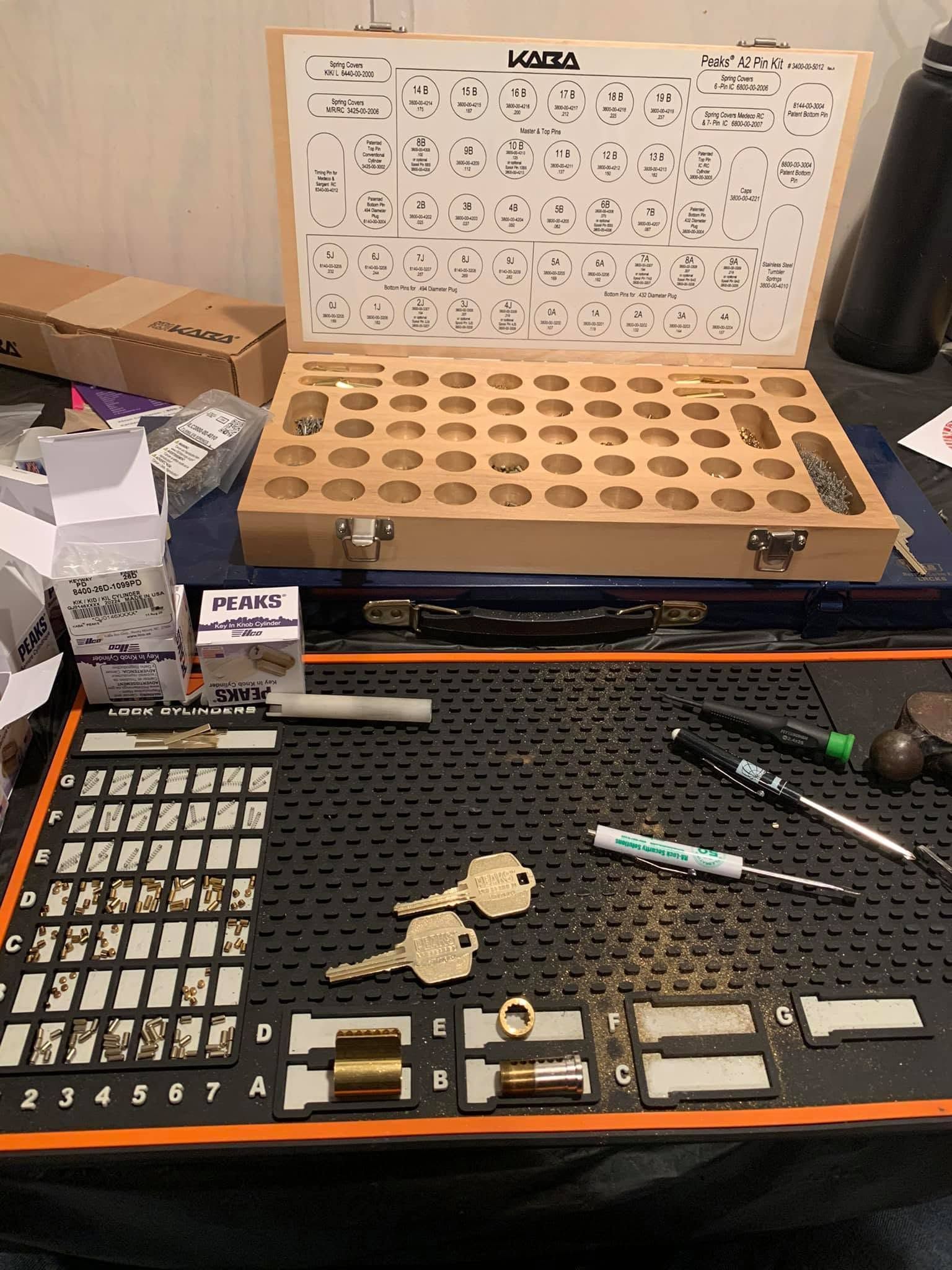
Why Rekeying Works for Access Changes
Rekeying begins by confirming that all locks use compatible cylinders and that the hardware remains in functional condition, since severely worn cylinders or locks with damaged internal components may not rekey reliably. The locksmith disassembles each cylinder, removes the existing pin set, and installs a new configuration that corresponds to a different key pattern. Residential properties with multiple entry points can be rekeyed so that a single new key operates all doors, while commercial properties may require separating access by keying some doors alike and others differently. The process preserves existing door hardware, avoids the cost of new locksets, and allows you to regain full control over who can enter.
After rekeying, old keys no longer turn the cylinder past the initial insertion point, new keys operate the lock smoothly, and you know exactly who holds working keys because distribution starts fresh. Tenants who moved out cannot re-enter, former employees lose access immediately, and uncertainty about key copies disappears because the previous key pattern no longer functions. The locks continue to operate as they did before, but access is now limited to those you have deliberately authorized with new keys.
Rekeying proves most useful when locks are relatively new or have been maintained and operate without sticking, binding, or misalignment issues. Locks that already require force to turn, that fail to latch consistently, or that show signs of internal wear may need repair or replacement instead, since rekeying does not address mechanical problems within the lock itself. The decision depends on cylinder condition, whether you need to change access or also improve functionality, and whether hardware meets current security standards for your property type.
Questions Before Starting Your Project
Common concerns about rekeying focus on compatibility, timing, and how the process compares to full lock replacement.
What happens during the rekeying process?
Rekeying involves removing the lock cylinder, taking out the existing pin stack, installing pins cut to match a new key pattern, reassembling the cylinder, and testing operation to confirm that only the new key turns the mechanism while old keys no longer align the pins correctly.
How many locks can be rekeyed to work with one key?
All locks with compatible cylinders and keyways can be rekeyed to operate with a single key, but older locks, mismatched brands, or cylinders with different pin configurations may require replacement to achieve uniform keying across all doors.
When does rekeying make more sense than replacing locks?
Rekeying works well when existing locks operate smoothly, when you simply need to eliminate access for previous keyholders, and when hardware is relatively new or in good condition, while replacement becomes necessary when locks are worn, damaged, or no longer appropriate for the door's security requirements.
Why do landlords in Wichita Falls rekey between tenants?
Rekeying prevents former tenants from retaining access after move-out, eliminates uncertainty about key copies that may have been made during occupancy, and allows property managers to issue fresh keys to new tenants without replacing functional locksets each turnover cycle.
What should I prepare before scheduling rekeying?
Count the number of locks that need rekeying, confirm whether you want all locks keyed alike or separated by access level, identify any locks that currently malfunction or stick, and determine whether you need master key capability or simple single-key operation.
Duncan's Commercial Lock LLC rekeys residential and commercial locks throughout the Wichita Falls area for property owners managing access after tenant changes, employee turnover, or key loss. Call (940) 636-2004 to review your property's locks and schedule rekeying service.